Unwanted or Distressed Land: When Your Property Becomes a Burden
Unwanted or Distressed Land: When Your Property Becomes a Burden
Owning land can be a great investment. But sometimes, a piece of land becomes more trouble than it is worth.
Maybe you inherited a vacant lot you never wanted. Maybe you bought land years ago and no longer have a use for it. Or perhaps the property has been sitting untouched and now needs a lot of cleanup.
Whatever the reason, unwanted land can become a financial and emotional burden.
You still have property taxes to pay. You may have to deal with weeds, trees, trash, or other maintenance issues. If the land is far away, even simple tasks can become a hassle.
In some cases, the situation can become even more serious. If you have fallen behind on property taxes or other payments, you could be facing a distressed property or even pre-foreclosure.
So, what can you do when you own land that you no longer want?
What Is Unwanted Land?
Unwanted land is simply property that you no longer want to own.
There does not have to be anything wrong with the land. You may have inherited it from a family member. You may have purchased it as an investment that did not work out. You may have moved away and no longer have any reason to keep it.
Sometimes, the land itself is the problem.
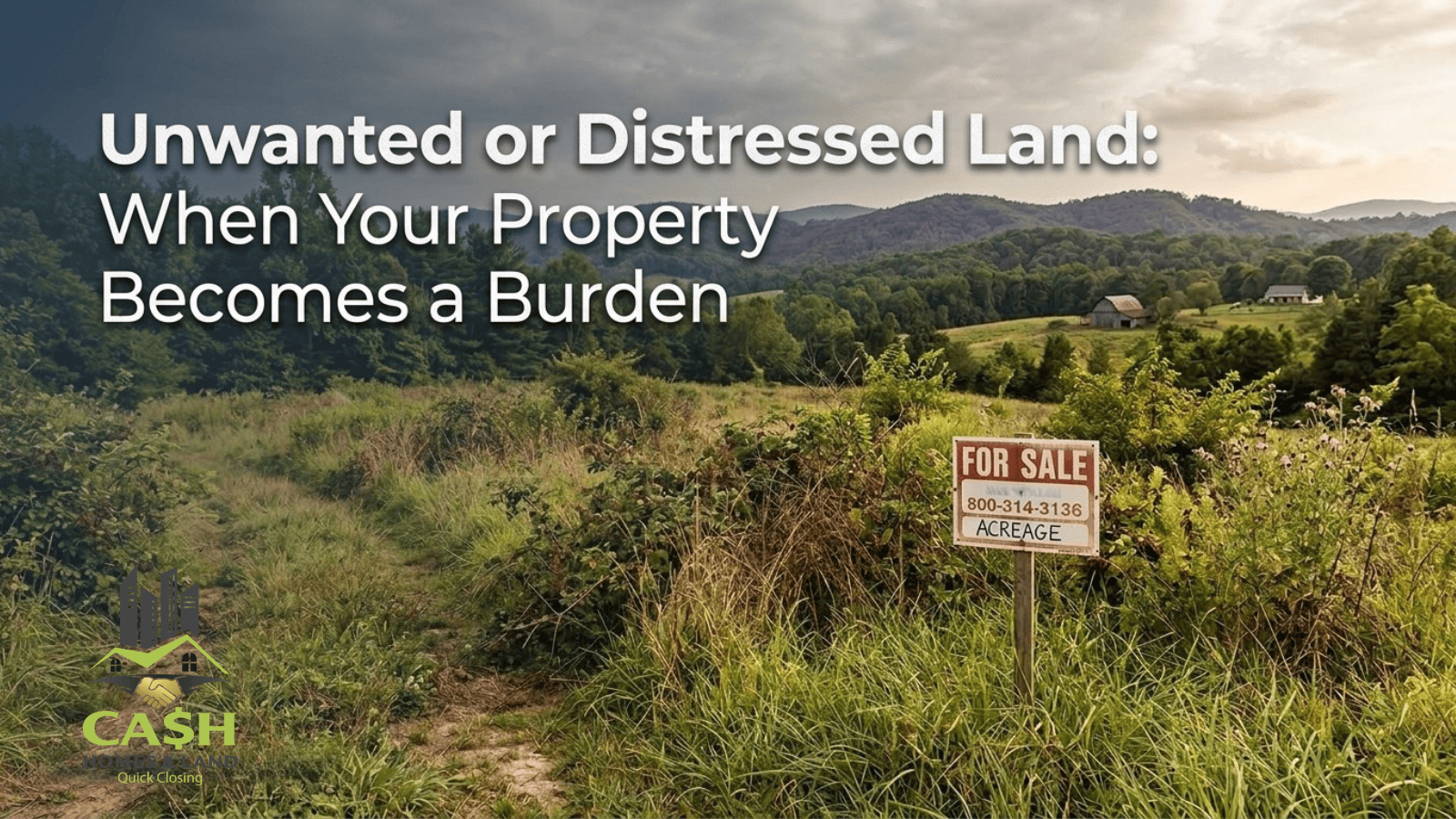
A vacant property can sit unused for years. During that time, taxes continue to come due. The property may become overgrown. Trees can fall. Trash can pile up. In some areas, vacant property can even attract unwanted activity.
Over time, a property that once seemed harmless can become a constant source of stress.
Distressed Land Can Be Even More Difficult
Distressed land is property that has one or more issues that make it harder to sell or maintain.
The problem could be financial. You may owe back taxes or have other debts tied to the property.
It could also be the condition of the land. Perhaps it is overgrown or filled with debris. Maybe there is an old structure that needs to be removed. You may know that the property needs work, but you do not want to spend thousands of dollars fixing it.
There can also be issues with access, zoning, title, or the property’s location.
None of these problems mean the land has no value. They simply mean selling it may take a different approach.
The Cost of Holding Onto Land You Don’t Want
One of the hardest parts about owning unwanted land is that the expenses do not stop just because you are not using the property.
Property taxes are a good example.
Every year, another tax bill can arrive. If you live far away, you may barely think about the property until that bill shows up. If you continue to hold the land for several years, those costs can add up.
Maintenance can create another problem.
Even vacant land may need attention. Grass and weeds can grow quickly. Fallen trees may need to be removed. Trash may need to be cleaned up. Depending on the property and local requirements, you may also have responsibilities for keeping the property safe and maintained.
If you live in another state, handling these problems can be even more frustrating.
You may have to find someone to visit the property. Then you have to arrange the work and pay the bill.
At some point, you may start asking yourself why you are spending money on something you do not even want.
What If the Land Needs a Lot of TLC?
Many landowners believe they need to fix their property before they can sell it.
That is not always the case.
Traditional buyers may want a property that is easy to understand and ready for development or use. If your land is overgrown, filled with debris, or has other issues, you may worry that you need to clean everything up first.
That can get expensive.
You could spend money on clearing trees, removing junk, mowing the property, making repairs, or addressing other problems. There is also no guarantee that spending money on improvements will make the property sell quickly.
For some landowners, the better option is to sell the property as-is.
A cash buyer may be willing to look at the land in its current condition. That means you may not have to spend your time and money trying to make the property perfect.
Inherited Land Can Become an Unexpected Headache
Inherited land is another common type of unwanted property.
When someone leaves you land, it can feel like a gift. But not every inheritance is simple.
The property may be located far from where you live. You may have no plans to use it. There may be several heirs involved. The land may also come with property taxes, maintenance needs, or other responsibilities.
Instead of being an asset you enjoy, it can become another thing on your to-do list.
Selling inherited land may be a way to turn that unwanted property into cash while avoiding years of additional expenses.
Of course, inheritance and estate situations can involve legal and tax issues. If your property is tied up in probate or has complicated ownership, it is a good idea to speak with the appropriate professional before making a decision.
What About Pre-Foreclosure Land?
Financial problems can make an unwanted property even more stressful.
If you have fallen behind on payments or property taxes, you may be worried about losing the land. Depending on the situation, you could receive notices and face important deadlines.
This is where the term pre-foreclosure land often comes into the conversation.
Pre-foreclosure generally means the foreclosure process has started or the owner is at risk of foreclosure because of unpaid obligations. The exact process can vary depending on the type of debt and where the property is located.
If you are dealing with a property that may be headed toward foreclosure, ignoring the problem usually does not make it go away.
Selling the land could be one option to consider. The sooner you understand your choices, the more time you may have to make a decision that works for your situation.
You Don’t Have to Keep Land Just Because You Own It
There is sometimes a feeling that selling land should be difficult.
It does not have to be.
If you have tried listing your property and have not found a buyer, you may be wondering what else you can do. You may not want to wait months or years for the right buyer to come along.
You may also not want to pay a real estate agent commission or spend money preparing the property for sale.
A cash sale can provide another option.
Instead of fixing the land, listing it, waiting for a buyer, negotiating repairs, and hoping the deal makes it to closing, you can explore what a cash buyer is willing to offer for the property in its current condition.
That does not mean a cash offer will always be the highest possible price. Every property is different, and you should compare your options.
But for some owners, convenience and speed are just as important as getting the highest possible price.
Selling Unwanted Land Can Bring Peace of Mind
Sometimes, the biggest benefit of selling unwanted land has nothing to do with the land itself.
It is the relief that comes with no longer having to worry about it.
You no longer have to remember the property tax bill. You no longer have to wonder whether the grass has become overgrown. You no longer have to figure out who can clean up the property.
You can simply move on.
If your land has become a burden, it may be worth finding out what your options are before spending more money on a property you do not want.
Cash Homes & Land Can Help
If you have unwanted land, distressed land, vacant property, or land that needs some TLC, Cash Homes & Land may be able to help.
We make cash offers on properties in their current condition. That means you do not have to make repairs or clean up the property before talking to us.
There are also no commissions and no hidden fees.
If you are tired of holding onto a piece of land that has become more of a headache than an asset, you can reach out to Cash Homes & Land for a quick cash offer.
There is no pressure to accept it. You can simply see what your property is worth and decide what makes sense for you.
Sometimes, the easiest way to deal with an unwanted property is to finally let it go.